

Insurance was built around uncertainty. InsurTech is changing how that uncertainty is measured, priced, managed and resolved.
For generations, insurance operated on a relatively simple principle: understand the risk, calculate the premium, collect it and be prepared to pay when something goes wrong.
The model worked, but it was often slow, document-heavy and dependent on historical information.
That is changing.
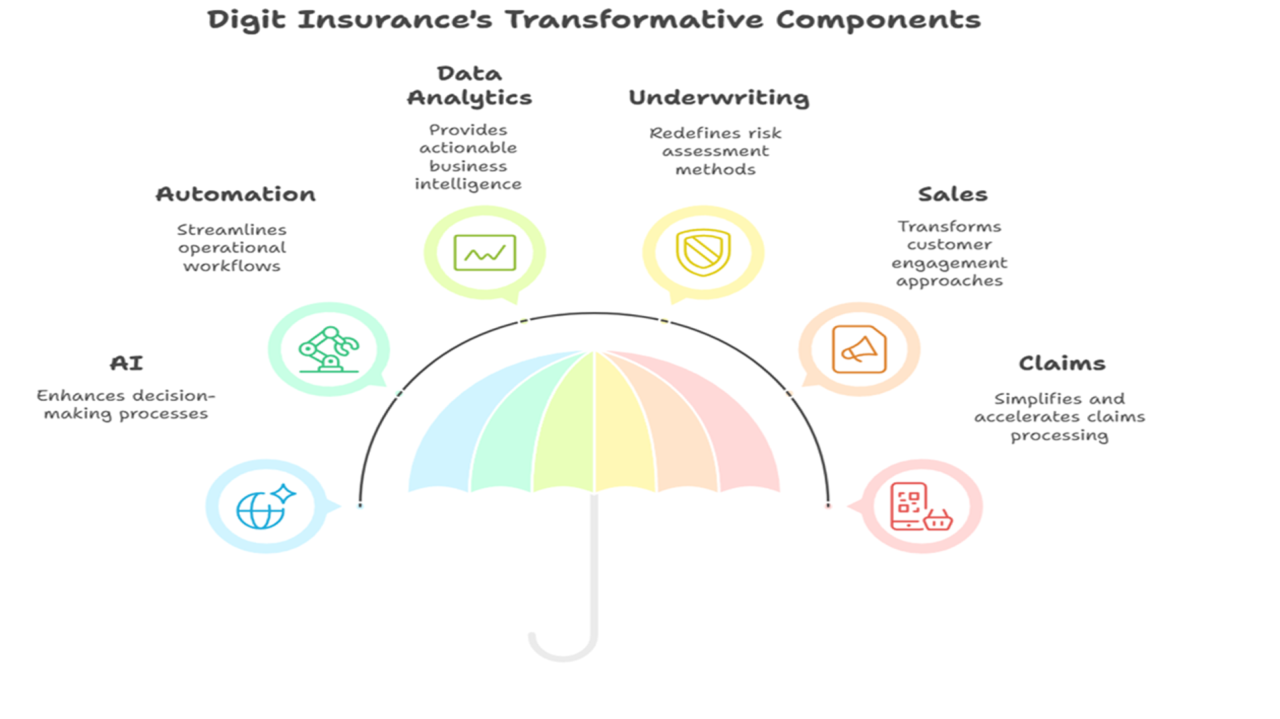
The rise of InsurTech is turning insurance into a more connected, data-driven and increasingly intelligent industry. Artificial intelligence, cloud platforms, IoT, telematics, automation, digital identity, advanced analytics and generative AI are moving into almost every stage of the insurance value chain.
The transformation is not simply about replacing paperwork with applications.
It is about changing how insurers understand risk itself.
From Historical Risk to Real-Time Risk
Traditional insurance has largely relied on historical information to predict future outcomes.
But risk does not remain static.
A person’s driving behaviour changes. A business’s operating environment changes. Weather patterns change. Health conditions change. Assets age. Cyber threats evolve.
Connected technologies allow insurers to observe some of these changes much closer to real time.
IoT sensors, telematics devices, connected vehicles, wearables and satellite imagery can generate continuous streams of information that were previously unavailable to insurers.
This creates a fundamental shift:
Insurance can increasingly move from predicting risk using yesterday’s information to understanding risk as it develops.
That has implications across motor, health, agriculture, property, commercial and specialised insurance.
AI Is Reengineering Underwriting
Underwriting sits at the heart of insurance.
The insurer needs to determine how much risk it is taking and what that risk should cost.
Historically, this has involved extensive documentation, predefined rules and manual analysis.
AI and advanced analytics are changing that process.
Machine-learning systems can analyse large datasets, identify patterns and support risk assessment at a scale that would be difficult to achieve manually.
For insurers, the objective is not simply automation.
It is better decision-making.
The more accurately an insurer understands a risk, the more effectively it can determine coverage, pricing and appropriate risk controls.
However, this also creates a responsibility.
As algorithms increasingly influence insurance decisions, insurers must ensure that the data being used is accurate, relevant and governed responsibly.
An intelligent underwriting system is only as reliable as the data and assumptions behind it.
Claims Are Moving From Paperwork to Prediction
For customers, the true test of an insurance company often arrives when a claim needs to be made.
This is where digital transformation can create one of the most visible improvements.
Traditional claims processes can involve forms, documents, inspections, manual verification and lengthy communication between multiple parties.
Digital claims platforms can eliminate much of this friction.
Customers can upload documents, submit photographs, track claim status and communicate with insurers through digital channels.
AI can go further.
It can help analyse documents, identify anomalies, assess damage and prioritise claims for further investigation.
The result is potentially faster settlement for legitimate claims while allowing insurers to focus human expertise on complex or suspicious cases.
The future of claims is therefore not necessarily human versus machine.
It is human expertise augmented by intelligent automation.
The Connected Car Is Creating a New Insurance Model
Motor insurance provides one of the clearest examples of InsurTech’s potential.
A traditional policy may primarily evaluate factors such as vehicle characteristics, driver profile and historical information.
Telematics introduces another dimension:
How is the vehicle actually being driven?
Connected systems can capture information related to driving behaviour and vehicle usage.
That creates the foundation for usage-based or behaviour-linked insurance models.
A safer driver could potentially be rewarded for safer behaviour, while insurers gain a more granular understanding of the risks associated with individual driving patterns.
The larger implication is significant.
Insurance pricing can gradually move from population-level assumptions toward more individualised risk assessment.
Agriculture Is Becoming More Data-Driven
InsurTech’s impact is not limited to urban consumers.
Agriculture is another area where technology can fundamentally change risk assessment.
Satellite imagery, remote sensing, weather data and predictive analytics can provide insurers with information about crop conditions and environmental risks.
Instead of relying entirely on manual field surveys, technology can help create a broader and more continuous picture of agricultural conditions.
For farmers, this can mean faster identification of potential risks.
For insurers, it can mean better assessment and potentially more efficient claims processes.
The lesson is broader than agriculture:
When previously invisible risk becomes measurable, insurance products can evolve.
Personalisation Is Becoming the New Customer Expectation
Consumers have become accustomed to personalised digital experiences.
They expect banking applications to understand their behaviour. They expect e-commerce platforms to recommend relevant products. They expect digital services to remember their preferences.
Insurance cannot remain isolated from this shift.
InsurTech enables insurers to analyse customer profiles, behavioural patterns and historical interactions to develop more relevant products and services.
This could mean personalised coverage options, digital recommendations, flexible policies or more targeted communication.
But personalisation must be balanced with privacy.
Insurance companies deal with some of the most sensitive forms of personal information.
The ability to collect more data does not automatically mean that insurers should collect everything.
The next generation of insurance will therefore need to combine personalisation with responsible data governance.
The Rise of the Always-Available Insurer
Customer expectations are also changing the way insurance companies communicate.
Customers no longer want to wait for office hours to ask a basic question.
Digital portals, mobile applications, messaging platforms, chatbots and virtual assistants are making insurance services increasingly available around the clock.
Generative AI could take this further.
Instead of simply answering predefined questions, AI systems can potentially understand natural-language requests, summarise policy information, assist with documentation and guide customers through processes.
Regional-language capabilities could also help insurers extend digital access beyond India’s largest urban markets.
This is particularly important in a country where linguistic diversity has historically been a barrier to digital adoption.
Generative AI Could Become the New Insurance Interface
Generative AI has the potential to influence insurance far beyond customer chatbots.
It could assist employees with:
- Policy document analysis
- Claims documentation
- Customer communication
- Knowledge retrieval
- Contract review
- Internal research
- Fraud investigation support
- Regulatory documentation
- Workflow automation
But insurers will need strong controls around accuracy, explainability, privacy and human oversight.
A hallucinated answer may be inconvenient in a general consumer application.
In insurance, it can potentially affect coverage, claims and financial decisions.
That makes governance essential.
The winning insurance organisations will therefore not be those that deploy AI everywhere.
They will be those that understand where AI should make decisions, where it should recommend decisions and where humans must remain firmly in control.
Fraud Detection Is Becoming More Intelligent
Insurance fraud remains one of the industry’s persistent challenges.
Fraudulent claims can increase costs for insurers and ultimately affect premiums for legitimate customers.
AI and analytics can identify unusual patterns across claims, transactions, documents and customer behaviour.
Rather than relying entirely on individual investigators to identify suspicious cases, insurers can use technology to flag cases that require deeper examination.
This creates a more efficient model:
Machines identify patterns. Humans investigate context.
That combination can be considerably more powerful than either approach operating independently.
The Biggest Transformation May Be Invisible
The most successful InsurTech innovations may eventually become so integrated into insurance operations that customers barely notice them.
A customer may simply experience:
A faster quote.
A more relevant policy.
A smoother claim.
A quicker settlement.
A better explanation.
A simpler renewal.
Behind that experience, however, could be dozens of automated systems working across data, AI, cloud infrastructure, identity verification and fraud detection.
That is the real promise of InsurTech.
Technology should not make insurance feel more technological. It should make insurance feel easier.
The Challenge: Technology Cannot Replace Trust
For all its potential, InsurTech also introduces difficult questions.
Who owns the data?
How should sensitive customer information be protected?
Can an algorithm explain why a particular risk was priced differently?
How should insurers prevent biased models?
What happens when an AI system makes a wrong recommendation?
How much automation is appropriate in a high-stakes claim?
These are not merely technical questions.
They are questions of trust, governance and accountability.
Insurance is fundamentally a promise.
Customers pay today in exchange for confidence that an institution will support them when something unexpected happens tomorrow.
Technology can make that promise more efficient.
It cannot replace the trust underlying it.
India’s InsurTech Opportunity
India has a particularly interesting opportunity.
A large population, rapidly expanding digital infrastructure, growing smartphone adoption and increasingly sophisticated digital consumers create fertile ground for insurance innovation.
The opportunity is not simply to digitise existing insurance products.
It is to rethink them.
Insurance could become more:
Accessible.
Personalised.
Data-driven.
Preventive.
Responsive.
Transparent.
The long-term winner may be the insurer that understands that customers do not actually want to buy insurance.
They want protection.
Technology can help insurers deliver that protection before, during and after a risk event.
The Future of Insurance Is About Preventing Loss, Not Just Paying for It
This could be the most important change InsurTech brings to the industry.
Traditional insurance largely responds after something goes wrong.
The emerging model is increasingly about identifying risk before it becomes a loss.
A connected vehicle can encourage safer driving.
A sensor can detect a problem before equipment fails.
Satellite data can identify agricultural risks earlier.
Analytics can identify suspicious activity before losses escalate.
AI can help customers understand their coverage before they need to claim it.
Insurance therefore has the opportunity to evolve from a reactive financial safety net into a proactive risk-management partner.
That is a much bigger transformation than simply putting insurance forms online.
The Final Word
InsurTech is not replacing the insurance industry.
It is forcing the industry to reconsider what insurance can be.
The next generation of insurers will combine technology with human judgement to understand risk more precisely, serve customers more intelligently and respond to claims more efficiently.
AI will help interpret data.
IoT will make risk more visible.
Cloud platforms will connect ecosystems.
Automation will remove repetitive work.
Generative AI will change how customers and employees interact with insurance.
But the ultimate measure of success will remain remarkably simple:
When customers need their insurer, does the technology make the experience faster, fairer and more reassuring?
If the answer is yes, InsurTech will have achieved its real purpose.
Not merely digitising insurance.
But making protection smarter.
