

Modern enterprise networks are becoming significantly more complex.
The growth of cloud applications, connected devices, IoT deployments, high-bandwidth applications and wireless-first workplaces is putting increasing pressure on the underlying network infrastructure.
Wi-Fi may be what users see, but the wired network underneath remains fundamental to delivering a reliable digital experience.
This makes the choice of network switches increasingly important.
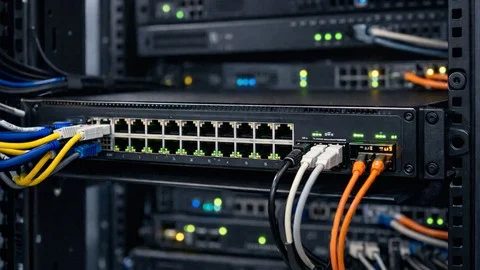
The RUCKUS ICX family of switches is designed to provide a flexible foundation for modern enterprise networks, supporting environments where organisations need scalability, performance and simplified management. The ICX portfolio is positioned for wired and wireless convergence and for networks that need to accommodate evolving connectivity requirements.
Why the Network Behind Wi-Fi Matters
When users experience poor wireless connectivity, the access point is often the first thing that receives attention.
However, the problem may originate deeper within the network.
Access points depend on the wired infrastructure for connectivity, power, traffic management and communication with the wider network.
As organisations deploy more access points, IoT devices and bandwidth-intensive applications, the underlying switching infrastructure needs to keep pace.
A network with insufficient capacity can become a bottleneck even when the wireless technology itself is capable of much higher performance.
This is why modern network planning increasingly needs to consider the entire connectivity stack, rather than treating Wi-Fi and switching as separate technologies.
The Challenge of Modern Network Architecture
Today’s networks need to support a diverse collection of devices and applications.
Employees may connect laptops and smartphones while organisations simultaneously operate cameras, sensors, access-control systems, printers, smart building equipment and other IoT devices.
At the same time, applications are increasingly hosted across cloud and hybrid environments.
This creates several challenges for network administrators.
They need infrastructure that can:
- Support different connection speeds
- Handle growing device volumes
- Provide reliable connectivity
- Deliver sufficient power to connected devices
- Simplify configuration and monitoring
- Support network segmentation and security
- Scale as organisational requirements change
Fixed and inflexible network architectures can make this increasingly difficult.
Why Flexible Switching Infrastructure Matters
A modern switch should not simply provide connectivity between devices.
It should become part of a broader network architecture that can evolve with the organisation.
RUCKUS ICX switches are designed around this principle, offering a range of configurations intended for different network requirements.
The ICX portfolio includes access and aggregation options and supports different combinations of Gigabit, Multigigabit and fibre connectivity depending on the model and deployment environment.
This flexibility can be particularly relevant for organisations upgrading networks incrementally rather than replacing the entire infrastructure at once.
Supporting Wireless-First and IoT Networks
The growth of wireless connectivity has changed the demands placed on wired infrastructure.
Modern access points can support substantially higher throughput and increasing numbers of connected devices.
IoT creates another layer of complexity.
Sensors, cameras, building-management systems and other connected devices can significantly increase the number of endpoints that a network must accommodate.
The RUCKUS ICX 8200 family, for example, is positioned for wireless-first and IoT campus networks, with support for Multigigabit and fibre connectivity, Power over Ethernet and high-speed uplinks.
This type of infrastructure allows organisations to build the wired foundation required by increasingly connected environments.
Powering Devices at the Network Edge
Power over Ethernet has become an important capability for modern networks.
Instead of requiring a separate electrical connection for every compatible device, PoE can deliver both network connectivity and power through Ethernet infrastructure.
This can simplify deployment for devices such as:
- Wireless access points
- Security cameras
- IP phones
- IoT equipment
- Building-management devices
For organisations managing large campuses or distributed facilities, this can reduce deployment complexity and provide greater flexibility in device placement.
Scaling Without Rebuilding the Entire Network
One of the major considerations when designing enterprise networks is what happens when requirements increase.
An organisation may begin with a relatively small number of connected devices and gradually add more users, access points, cameras, IoT systems and applications.
Replacing infrastructure every time demand increases is neither practical nor economical.
Stackable and scalable switching architectures can provide another approach.
The RUCKUS ICX 8200 series, for example, is designed with stackability and future expansion in mind, including support for 25GbE uplinks and stacking on applicable configurations.
This type of architecture allows organisations to expand capacity as requirements evolve.
Network Management Is Becoming Just as Important as Network Hardware
Hardware performance is only one part of network operations.
As networks become larger and more distributed, administrators need visibility into what is happening across the environment.
They need to understand:
- Network utilisation
- Device health
- Connectivity problems
- Configuration changes
- Security events
- Performance issues
Centralised management can reduce the operational burden associated with maintaining complex environments.
RUCKUS also provides unified management options across its networking portfolio, allowing organisations to approach wired and wireless infrastructure as part of a broader network environment.
Security Needs to Extend Across the Network
Network infrastructure is increasingly part of an organisation’s security architecture.
Every connected device represents another potential access point into the enterprise environment.
Network segmentation, authentication, access controls and monitoring can therefore play an important role in reducing risk.
This becomes particularly important in environments where employees, guests, IoT devices and operational systems share the same physical infrastructure.
A modern network should make it possible to manage these different categories of devices without treating them as one undifferentiated network.
Preparing for the Next Generation of Connectivity
Network infrastructure decisions often have a longer lifespan than the devices connected to them.
A switch installed today may need to support several generations of access points, endpoint devices and applications.
That makes future-readiness an important consideration.
Organisations should therefore evaluate network infrastructure not only against current bandwidth requirements but also against expected growth.
Multigigabit connectivity, high-speed uplinks, PoE capabilities, scalability and management flexibility can all contribute to a network architecture that is better prepared for future requirements.
The Bigger Picture: Wired and Wireless Are One Network
One of the most important changes in enterprise networking is the gradual disappearance of the distinction between the wired and wireless experience.
Users expect connectivity to work regardless of whether their device is connected through Ethernet or Wi-Fi.
IT teams therefore need to think about the network as a unified infrastructure.
The wireless layer delivers the user experience, while the wired layer provides the backbone that supports it.
Both need to work together.
Conclusion
Enterprise networking is no longer simply about connecting computers.
Modern infrastructure needs to support cloud applications, wireless users, IoT devices, security systems, smart buildings and increasingly demanding digital services.
That makes the underlying switching infrastructure a strategic component of the digital environment.
RUCKUS ICX switches are designed to address these requirements through a combination of performance, scalability, PoE capabilities, flexible connectivity and management options.
For organisations planning their next network upgrade, the objective should be broader than simply increasing bandwidth.
The real goal is to build an infrastructure that can scale with the organisation, simplify operations and provide a reliable foundation for the next generation of connected technology.
