

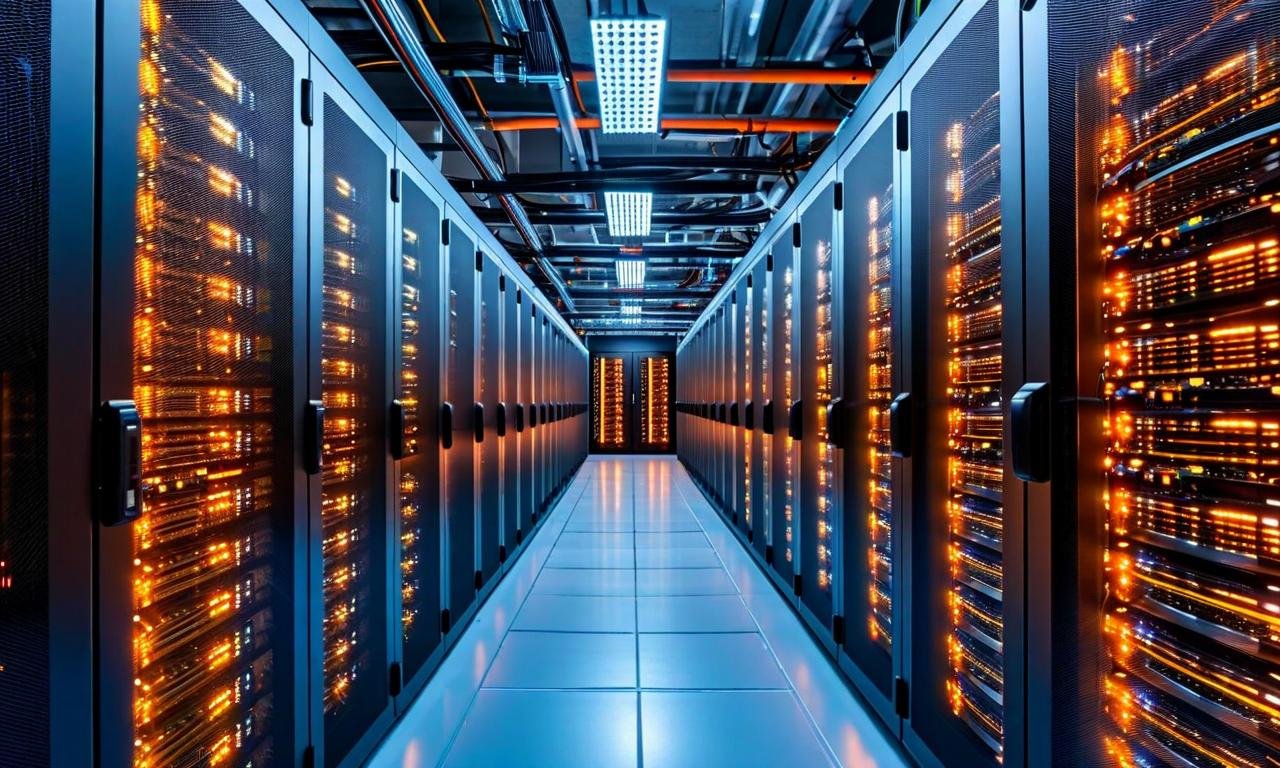
As demand for AI and GenAI workloads grows across enterprises, research institutions and higher education, scalable GPU infrastructure is becoming one of the most important foundations of India’s AI ecosystem.
Artificial Intelligence is moving rapidly from experimentation into production.
Enterprises are training increasingly sophisticated models, startups are building AI-native products, universities and research institutions are expanding computational workloads, and organisations are exploring generative AI across an expanding range of use cases.
But behind every AI application lies a fundamental requirement:
Compute.
AI models require enormous amounts of processing power, memory and high-speed networking. As workloads grow, organisations need infrastructure capable of scaling without creating performance bottlenecks or compromising reliability.
This is where E2E Networks and Dell Technologies partnered to address the growing demand for AI/ML and GenAI infrastructure in India.
E2E Networks, an Indian cloud infrastructure provider with a strong focus on GPU computing, identified a significant opportunity in the growing market for AI workloads. However, scaling its GPU infrastructure required a technology architecture capable of supporting increasingly complex workloads.
The AI Infrastructure Challenge
AI infrastructure is fundamentally different from conventional cloud infrastructure.
Traditional workloads can often be distributed across standard CPU-based computing environments.
AI training and inference, however, can require specialised GPUs, high-bandwidth memory and extremely fast communication between compute nodes.
For E2E Networks, the challenge was therefore not simply adding more servers.
The company needed an infrastructure platform that could provide:
- Greater scalability
- High-performance GPU computing
- Low network latency
- Strong reliability
- Future expansion capabilities
- Support for increasingly complex GenAI workloads
The objective was to create a platform that could support customers ranging from startups and enterprises to higher-education and research organisations.
Why GPU Infrastructure Has Become Strategic
The growth of generative AI has changed the economics of cloud computing.
Large language models, computer vision systems and other AI applications can require significant GPU resources for both training and inference.
This has created growing demand for GPU-as-a-Service (GPUaaS).
Instead of purchasing expensive GPU infrastructure themselves, organisations can access computational resources through cloud providers.
This model allows companies to experiment with AI and scale workloads without making the entire capital investment required to build their own AI data centre.
For cloud providers, however, delivering GPUaaS at scale requires serious infrastructure investment.
Building a Scalable AI Platform
E2E Networks partnered with Dell Technologies to build a more robust infrastructure foundation for its GPUaaS offering.
The resulting architecture combines Dell’s enterprise hardware with NVIDIA GPU technology and a high-speed networking design intended to support large-scale AI workloads.
At the heart of the solution are Dell PowerEdge XE9680 servers equipped with NVIDIA H200 SXM GPUs.
Each H200 GPU in the configuration provides 141 GB of HBM3e memory, giving the infrastructure significantly more capacity for demanding AI training and inference workloads.
This matters because AI performance is not determined solely by raw processing power.
Memory capacity and memory bandwidth can become critical bottlenecks when working with large models and datasets.
400G Networking for AI Workloads
Another important component of the architecture is networking.
AI workloads can involve enormous amounts of data moving between GPUs and servers.
If the network becomes a bottleneck, adding more powerful GPUs may not translate into proportional improvements in overall performance.
To address this challenge, Dell designed a leaf-spine network architecture capable of 400G throughput for E2E Networks.
The architecture is intended to provide a high-bandwidth foundation for GPUaaS and allow E2E Networks to expand its infrastructure as customer requirements increase.
This illustrates an important principle in AI infrastructure:
Compute and networking need to be designed together.
A powerful GPU cluster connected through an insufficient network can still deliver disappointing real-world performance.
Performance Matters Beyond the GPU
The infrastructure evaluation also focused on reliability and operational performance.
Dell’s PowerEdge XE9680 platform was evaluated through a proof of concept at Dell’s HPC & AI Innovation Lab in Austin.
The assessment included areas such as cluster management and multi-tenancy, which are particularly important for a cloud provider serving multiple customers.
For GPUaaS providers, multi-tenancy is critical.
The infrastructure needs to support different customers and workloads while maintaining predictable performance and strong isolation.
That makes enterprise-grade reliability as important as raw GPU performance.
Security Becomes Critical at AI Scale
AI infrastructure is increasingly becoming part of an organisation’s most important technology assets.
The systems processing AI workloads may handle proprietary datasets, sensitive research, intellectual property and business-critical applications.
Security therefore needs to be incorporated into the infrastructure itself.
The Dell platform selected by E2E Networks includes features such as Dynamic System Lockdown, secure system erase capabilities for NVMe drives, secured supply-chain capabilities and multi-factor authentication for out-of-band management.
For a cloud provider, these capabilities can become particularly important when infrastructure is shared across multiple customers.
From Infrastructure Investment to Business Opportunity
The partnership was not simply a hardware upgrade.
The larger objective was commercial.
By expanding its GPU infrastructure, E2E Networks could address a wider market for AI and GenAI workloads.
The company identified opportunities across:
- Enterprises
- Startups
- Higher education
- Research institutions
- Computer vision applications
- Generative AI
- Machine learning workloads
The enhanced infrastructure subsequently enabled E2E Networks to pursue new customer opportunities and expand its presence in India’s AI/ML market.
This is an important shift in how AI infrastructure should be viewed.
Infrastructure is no longer merely a back-end IT cost.
For cloud providers, it can become the product itself.
The Economics of AI Infrastructure
One of the most interesting aspects of the E2E Networks model is the focus on total cost of ownership.
AI infrastructure is expensive.
GPU servers, networking, storage, cooling and power requirements can create substantial capital and operating costs.
Cloud GPU providers therefore need to deliver high utilisation and predictable performance.
The goal is not simply to purchase the fastest available hardware.
It is to build a system where compute resources can be efficiently delivered to customers while maintaining reliability and commercially viable economics.
E2E Networks has emphasised the importance of matching internal network bandwidth with GPU capabilities to avoid infrastructure bottlenecks and improve the economics of its cloud GPU offering.
Why India’s AI Ecosystem Needs Infrastructure
India’s AI ambitions cannot be achieved through software talent alone.
The country also needs access to large-scale compute.
Startups developing AI products need GPUs.
Researchers training models need GPUs.
Universities conducting advanced computational research need GPUs.
Enterprises experimenting with GenAI need scalable infrastructure.
This makes domestic cloud GPU providers strategically relevant.
The availability of local AI infrastructure can reduce barriers for organisations that cannot afford to build large GPU clusters themselves.
The Importance of Future-Proofing
AI infrastructure has an unusually short technology cycle.
GPU architectures evolve rapidly.
Model sizes increase.
Memory requirements grow.
Networking speeds improve.
What appears sufficient today may become inadequate for tomorrow’s workloads.
This makes future-proofing particularly important.
E2E Networks’ partnership with Dell was designed around a scalable infrastructure model that could accommodate growing AI workloads rather than solving only its immediate capacity requirements.
For infrastructure providers, this approach can reduce the risk of repeatedly redesigning the platform as demand increases.
AI Infrastructure Is Becoming a Competitive Advantage
The E2E-Dell partnership demonstrates a broader trend taking place across the technology industry.
AI is creating a new infrastructure race.
The organisations that can provide reliable access to high-performance compute will play an important role in determining how quickly businesses can adopt AI.
This includes not only hyperscalers.
Specialised cloud GPU providers can serve organisations that require specific infrastructure configurations, regional availability or more flexible access to compute.
India’s growing AI ecosystem could therefore create significant opportunities for domestic infrastructure providers.
What This Means for Enterprises
For enterprises considering AI adoption, the lesson is straightforward.
Choosing an AI model is only one part of the equation.
Organisations also need to consider:
Where will the workload run?
What GPU capacity is required?
How will data move between systems?
What networking architecture is necessary?
How will security be maintained?
How will the infrastructure scale?
What will the total cost of ownership look like?
These questions become increasingly important as AI moves from pilot projects to production systems.
The Road Ahead
The E2E Networks and Dell partnership illustrates how India’s AI infrastructure ecosystem is developing beyond individual AI applications.
The focus is shifting toward the foundational systems required to support AI at scale.
High-performance GPUs, high-bandwidth memory, 400G networking, enterprise security and scalable cloud architectures are becoming critical components of the AI economy.
As India’s AI adoption accelerates, demand for these capabilities is likely to grow alongside it.
The biggest AI breakthroughs may receive the most attention, but behind every successful AI application is an infrastructure layer capable of making it possible.
Conclusion
India’s AI opportunity is ultimately an infrastructure opportunity as much as it is a software opportunity.
The partnership between E2E Networks and Dell Technologies demonstrates how specialised GPU infrastructure can help cloud providers respond to rapidly increasing demand for AI, ML and GenAI workloads.
The combination of NVIDIA H200 GPUs, Dell PowerEdge infrastructure, high-speed networking and scalable architecture gives E2E Networks a foundation for expanding its GPUaaS offering and serving organisations that need access to serious AI compute.
The broader lesson is clear:
AI cannot scale without infrastructure that can scale with it.
As India seeks to strengthen its position in the global AI ecosystem, access to reliable, high-performance and scalable compute will become one of the country’s most important technology priorities.
