

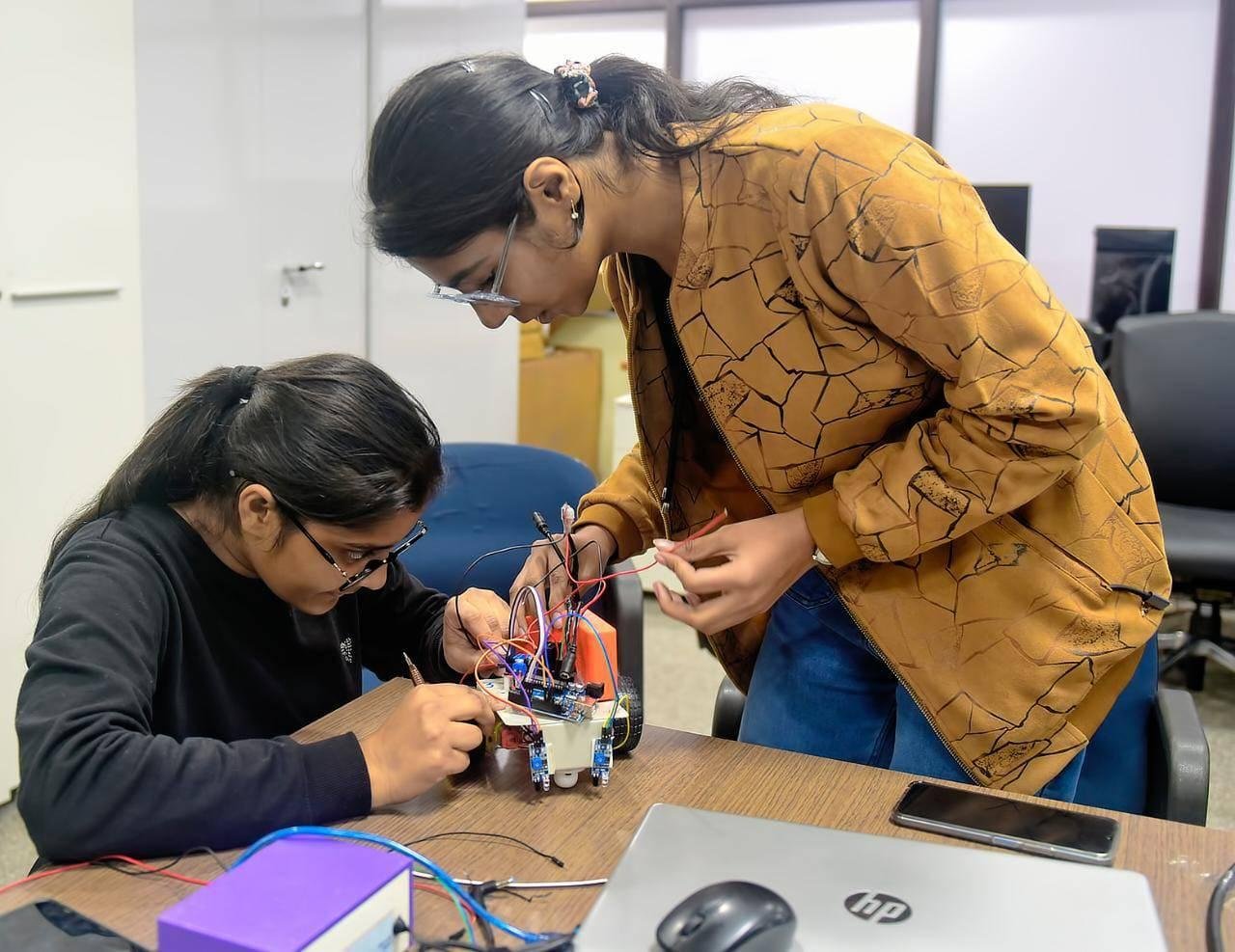
Innovation is the lifeblood of economic progress. Yet, too often, our innovation systems are closed to the very demographic most naturally inclined toward creative problem-solving: the young. We build laboratories and research centers, but we staff them with established professionals. We launch innovation challenges, but we design them for experienced practitioners. We fund R&D, but we allocate resources to known entities rather than emerging talent.
The third pillar of our youth participation framework addresses this gap: creating formal channels for young people to propose, test, and develop new ideas, technologies, products, and business models.
The Innovation Deficit
India’s innovation record is a mixed picture. We celebrate the successes—the unicorns, the digital public infrastructure, the space program—but we overlook the vast unrealized potential. Our R&D spending remains below the global average. Our patent filings lag behind comparable economies. Our educational institutions produce brilliant minds, but too many of them leave India for countries with more robust innovation ecosystems.
This deficit has many causes, but one stands out: we do not systematically channel youth energy into innovation. A young person with a breakthrough idea faces a labyrinth of barriers: limited funding, absence of mentorship, lack of institutional support, and a culture that often prizes conformity over creativity.
The Innovation Pipeline
The solution is a structured pipeline that moves youth from idea to impact:
- Identification: Schools, colleges, and community organizations should systematically identify young people with demonstrated creative or analytical potential. This is not about elitism; it is about ensuring that talent does not go unrecognized due to socioeconomic disadvantage.
- Ideation: Platforms—physical and virtual—should be created for youth to propose solutions to real-world problems. These platforms must be accessible, low-barrier, and meritocratic. Ideas should be evaluated not by pedigree but by potential.
- Incubation: Promising ideas should receive structured support: mentoring from domain experts, access to laboratories and prototyping facilities, and modest funding for initial development.
- Testing: Youth-led innovations should be piloted in real-world environments. In the tourism sector, this might mean testing a new destination management model in a pilot region. In manufacturing, it might mean deploying a prototype production system in a partner factory.
- Scaling: Successful pilots should be supported for scaling through further investment, market access, and policy support.
Sectoral Applications
This framework applies across every industry. Consider a few examples:
In agriculture, young innovators could develop low-cost sensor networks for precision farming, AI-driven pest prediction, or blockchain-based supply chain traceability. The barriers are not technological but institutional.
In healthcare, young minds could design affordable diagnostic devices, telemedicine platforms for rural areas, or community health education programs. The creativity of youth is not constrained by the mental models of existing practitioners.
In tourism, young Indians could create experiential travel apps, cultural preservation platforms, sustainable tourism certification systems, or AI-powered travel assistants. The sector is ripe for disruption.
The Organizational Role
For B2B organizations, this pillar represents an innovation strategy. By channeling youth creativity, companies can access ideas that their internal R&D teams might never consider. They can build relationships with emerging talent. They can position themselves as leaders in youth engagement.
A hospitality chain could launch a youth innovation challenge: “Design the Hotel of 2040.” Winning ideas receive funding for development and a pilot opportunity in a real property. The company gains a portfolio of future-ready concepts. The young innovators gain credibility and experience.
Beyond Commercial Value
There is a deeper value here. Innovation is inherently empowering. A young person who has proposed, developed, and implemented an idea experiences a transformation: from passive learner to active creator. They develop confidence, agency, and a sense of possibility. They become innovators for life, contributing not just to one project but to a culture of creativity.
For India, this pillar is crucial to moving from a factor-driven to an innovation-driven economy. The young minds of today are not just the workforce of tomorrow; they are the inventors, entrepreneurs, and problem-solvers who will define India’s economic future.
