

How Analytics Can Help Indian Cities Tackle Air Pollution
Moving beyond reactive measures, cities can use satellite data, artificial intelligence, and predictive models to anticipate and intervene in urban air quality crises.
Air pollution remains one of the most pressing challenges facing Indian cities, particularly during periods when pollution levels rise sharply due to traffic, industrial activity, weather conditions and agricultural burning. While there is no single solution to the problem, data analytics and artificial intelligence could help authorities respond in a more timely and targeted manner.
Detecting Pollution at the Source
One important application is the use of satellite data and AI to detect incidents such as stubble burning. By analysing real-time information, technology can help identify pollution sources, assess their potential impact and support faster intervention. AI-based advisory tools could also help farmers explore more sustainable ways of managing crop residue.
Forecasting the Air Quality Crisis
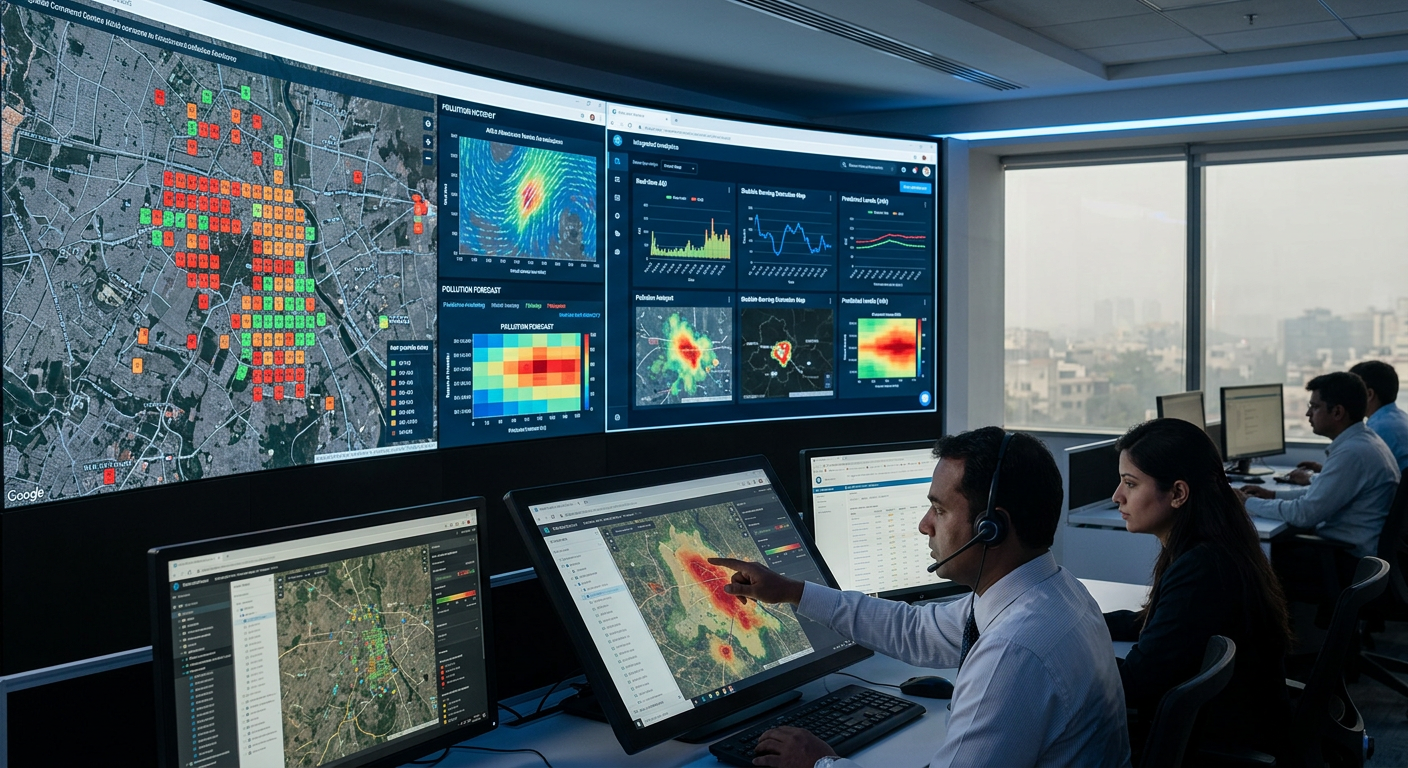
Predictive analytics can further improve air quality monitoring. Instead of relying only on traditional methods, cities can combine data from sensors, satellite imagery, weather systems and historical pollution records to forecast when and where air quality may deteriorate. This could give authorities valuable time to introduce measures such as traffic restrictions, industrial controls or public health warnings.
Data-Driven Urban Management
Analytics can also support smarter urban management. AI models can identify pollution hotspots, analyse traffic patterns and help policymakers assess which interventions are producing meaningful results. Continuous monitoring can make it easier to refine policies based on evidence rather than assumptions.
Strengthening Healthcare Resilience
The technology could also strengthen healthcare preparedness by helping authorities anticipate periods when pollution-related illnesses may increase. Hospitals and public health systems could use these insights to better plan staffing and resources.
Ultimately, cleaner air will require coordinated action across government, technology, industry and communities. Analytics cannot solve the crisis alone, but it can help Indian cities move from reacting to pollution after it becomes severe towards predicting risks and taking action earlier.
