

Physical AI Goes Mainstream as Manufacturers Scale Up AI Implementation, TCS Study Finds
Moving beyond software interfaces, artificial intelligence is increasingly interacting with the physical world, driving a structural shift from experimental pilots to large-scale industrial deployment.
Artificial intelligence is moving beyond software applications and becoming an increasingly important part of the physical world. A new study from TCS suggests that manufacturers are now taking physical AI more seriously, with many organisations moving from pilot projects towards larger-scale implementation.
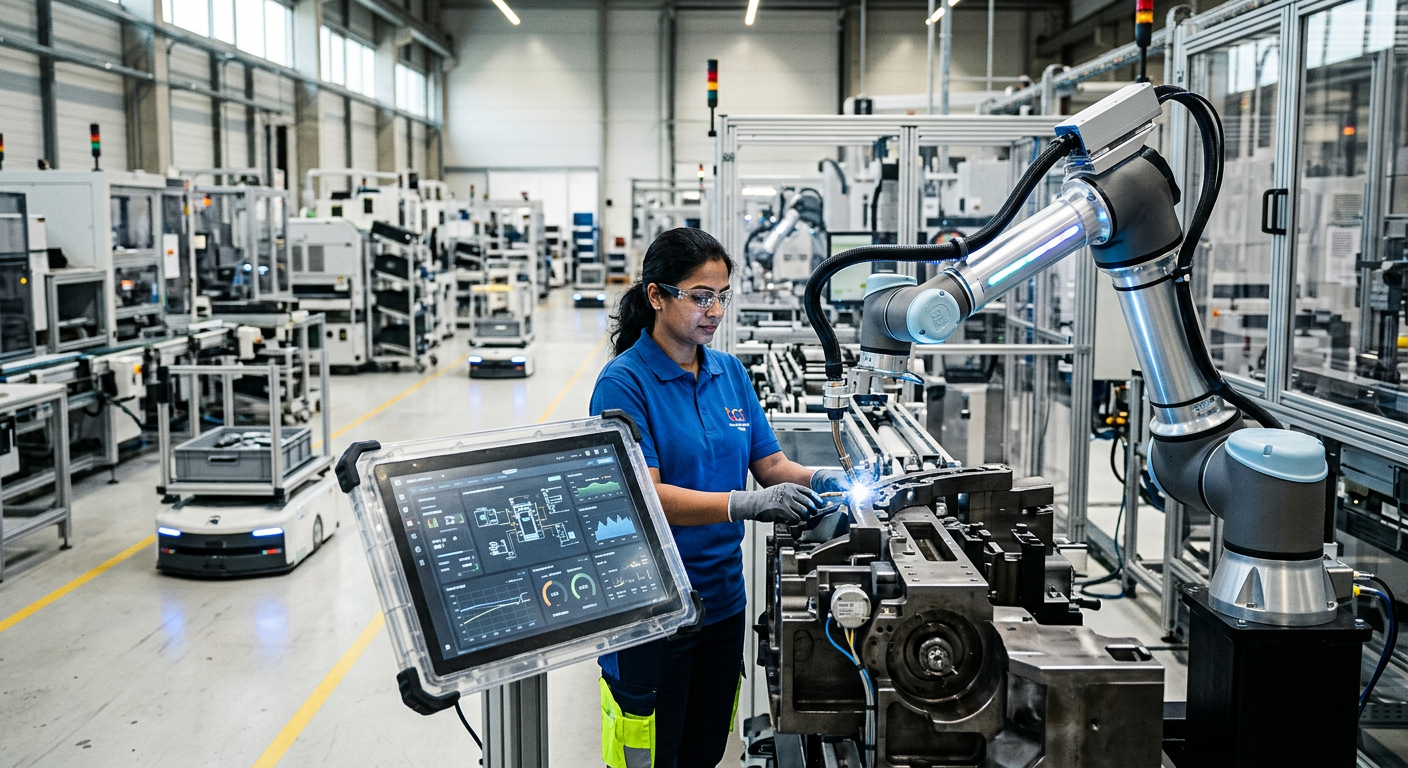
Physical AI refers to intelligent systems that can interact with and respond to real-world environments. In manufacturing, this can include AI-powered robots, autonomous systems, intelligent machines and connected equipment that use data to make decisions and perform tasks.
The growing adoption reflects a broader shift in the sector. Manufacturers are looking beyond experimentation and exploring how AI can deliver measurable improvements in productivity, efficiency, quality and operational resilience.
By combining AI with sensors, robotics and industrial data, companies can create smarter production environments capable of responding more quickly to changing conditions.
Roadblocks to Scalability
However, scaling physical AI is not without challenges. Integrating advanced intelligence into legacy manufacturing environments requires overcoming several structural hurdles:
Manufacturers need reliable data, strong digital infrastructure and systems that can integrate AI with existing operational technology.
Workforce skills and cybersecurity are also becoming increasingly important as factories become more connected and autonomous.
The TCS study highlights that physical AI is no longer simply a future concept for the manufacturing industry. Organisations are increasingly seeing it as a practical technology with the potential to reshape factory operations and industrial processes.
As AI continues to move from digital interfaces into machines and physical environments, manufacturers that can successfully scale these technologies may gain an important advantage in improving efficiency, flexibility and long-term competitiveness.
