

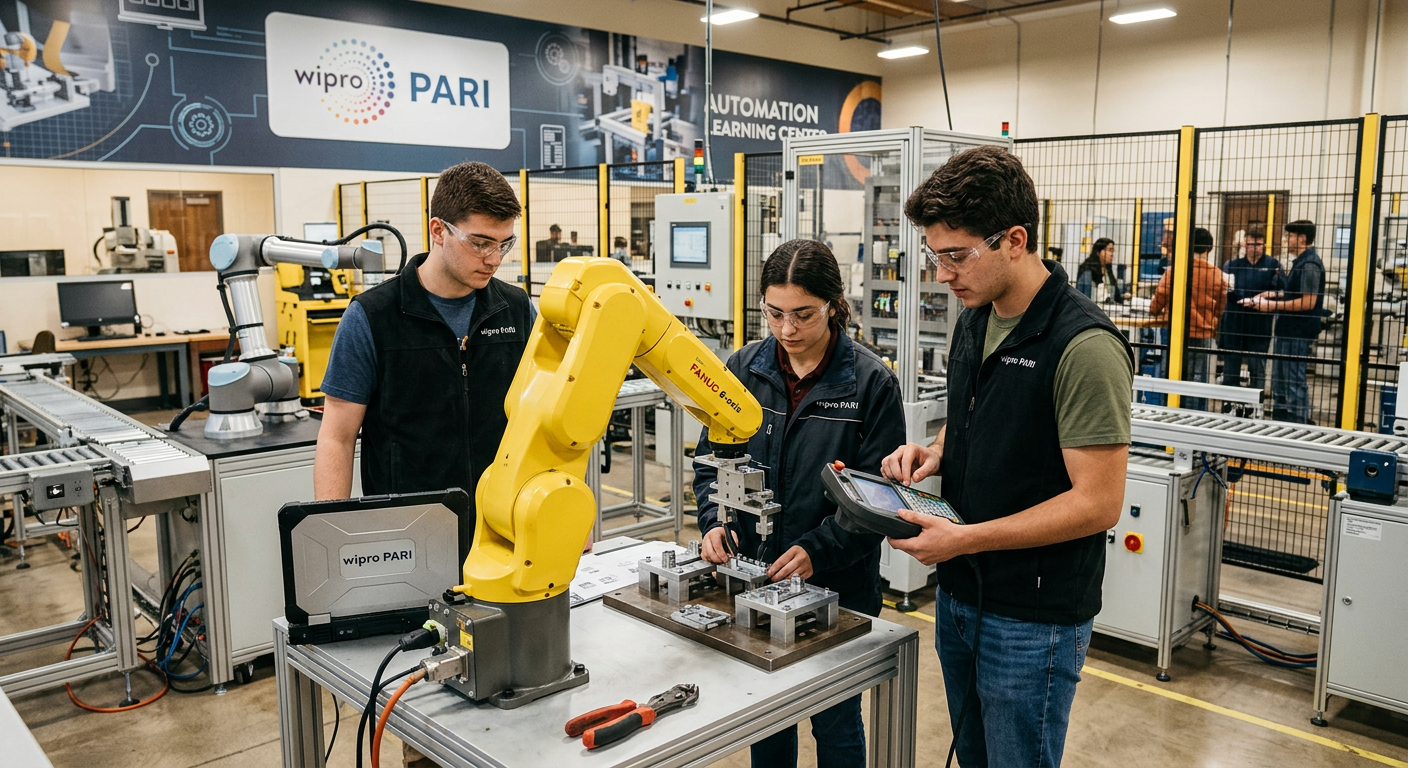
Wipro PARI Strengthens Hands-On Robotics and Automation Learning for Future Manufacturing Talent
As factories adopt technologies associated with Industry 4.0, bridging the gap between classroom theory and real-world industrial systems has become an imperative for workforce readiness.
As manufacturing becomes more automated and technology-driven, the industry is facing a growing need for professionals with practical skills in robotics, automation and advanced production systems. Wipro PARI is addressing this challenge by strengthening hands-on learning opportunities designed to prepare the next generation of manufacturing talent.
The initiative focuses on giving students and aspiring professionals greater exposure to real-world industrial technologies rather than limiting learning to classroom-based theory. Through practical training, learners can better understand how robotics, automation and connected manufacturing systems operate in modern production environments.
Bridging the Industry 4.0 Skills Gap
This approach is becoming increasingly important as factories adopt technologies associated with Industry 4.0. Manufacturers are looking for talent that can work with automated equipment, industrial robots, digital systems and data-driven processes. Developing these capabilities early could help bridge the gap between academic learning and the skills required on the factory floor.
Hands-on training can also encourage problem-solving and innovation. By working directly with industrial technologies, learners gain a clearer understanding of how automation can improve productivity, quality and operational efficiency.
A Future-Ready Workforce
The demand for skilled manufacturing professionals is expected to grow as companies continue investing in smart factories and advanced industrial systems. Building a future-ready workforce will therefore require stronger collaboration between industry and education.
Wipro PARI’s focus on practical robotics and automation learning reflects a broader shift in manufacturing talent development. As technology reshapes the factory environment, preparing people with relevant, real-world skills will be just as important as investing in the technologies themselves.
